Boycott 2025 Results
When 2025 started, I was feeling pretty helpless.
cough politics cough
I was frustrated with the state of things, and I wanted to do something. I still believe the power of individual spending (i.e. voting with your wallet), so I decided to boycott the big retailers; Target, Amazon, Whole Foods, Walmart.
I figured it would be a small, personal protest. Maybe I'd feel slightly better about myself while still ultimately giving in whenever I needed something quickly. But, this mindset ended up spreading to quite a few facets of life.
The Mental Checklist
It started as protest. But along the way, it stopped being about spite and started just not really needing things from these stores. I developed a mental checklist before making any purchase:
- Do I really need this thing? (This eliminates a surprising amount)
- Can I borrow it from someone?
- Can I buy it used?
- Can I buy it from a local store?
- THEN I would break my rule
That fourth question led me to some amazing little stores in my area that I would've never found otherwise. A craft store selling only recycled art supplies. A local art material shop. A used outdoor gear store. A fabulous used bookstore. A bike restoration mission that collects bikes, parts them out, and sells reassembled ones. Thriftbooks.com!
Turns out my city had all this stuff, and I just never had a compelling enough reason to look.
The Stats
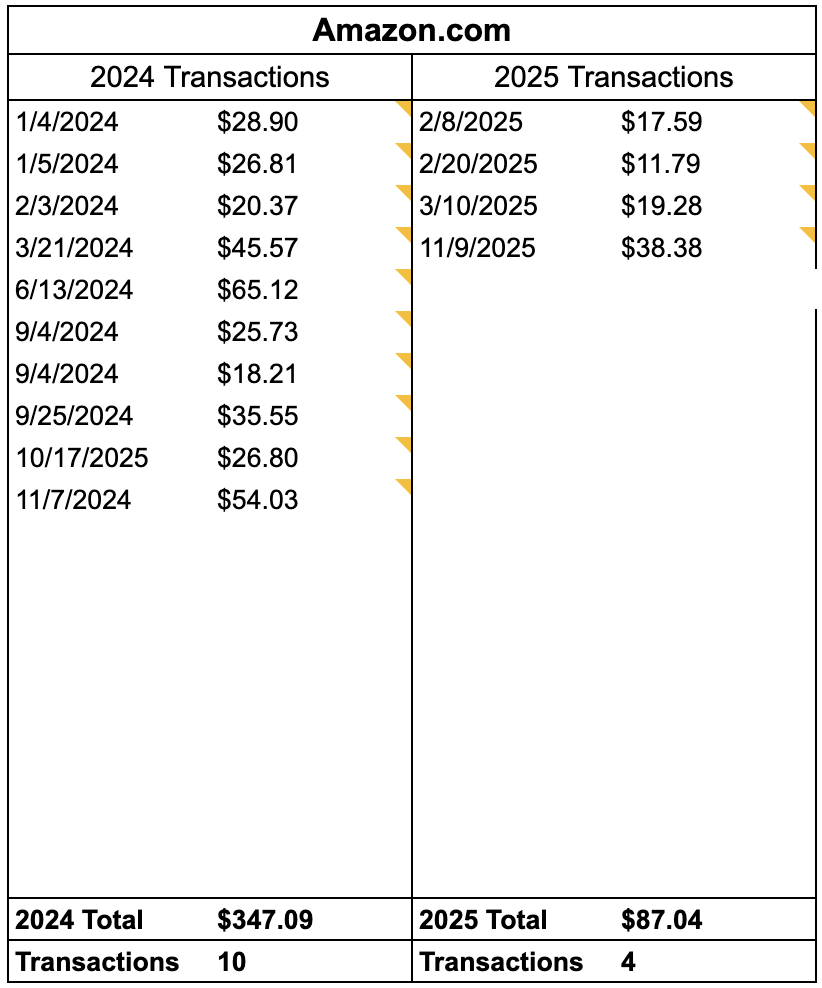
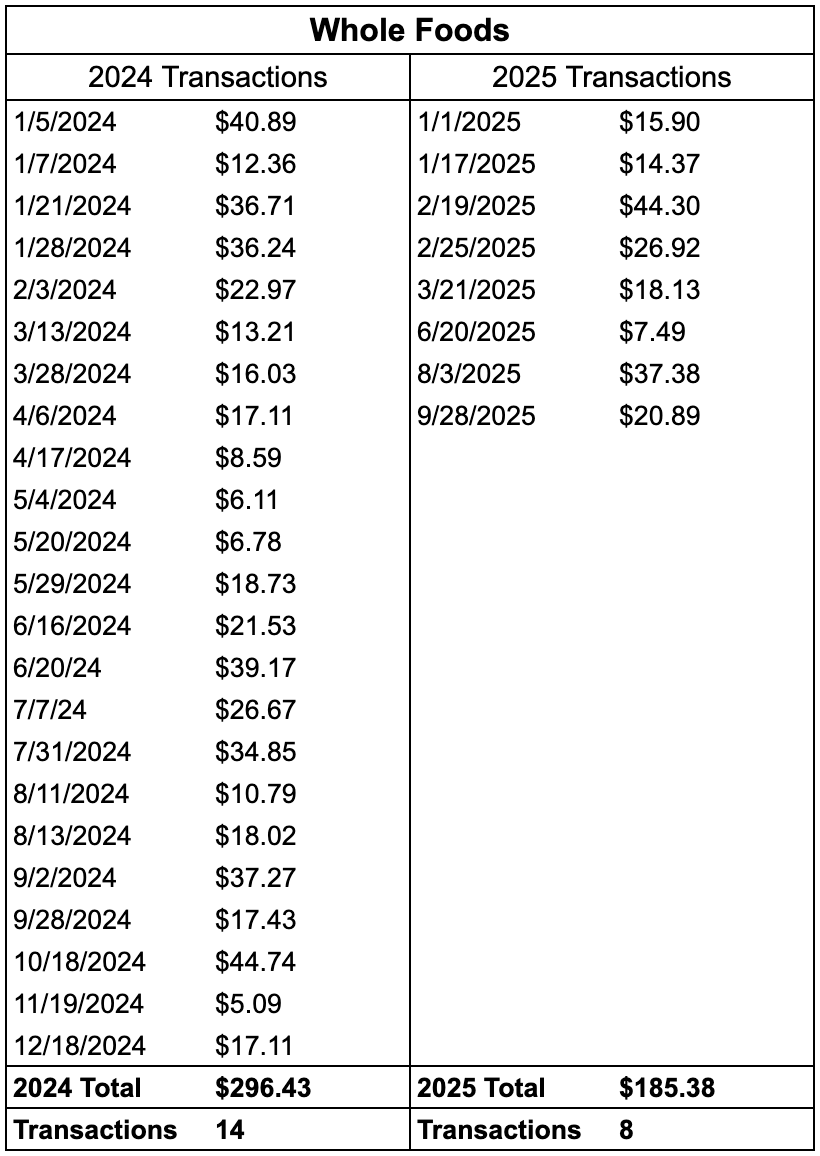
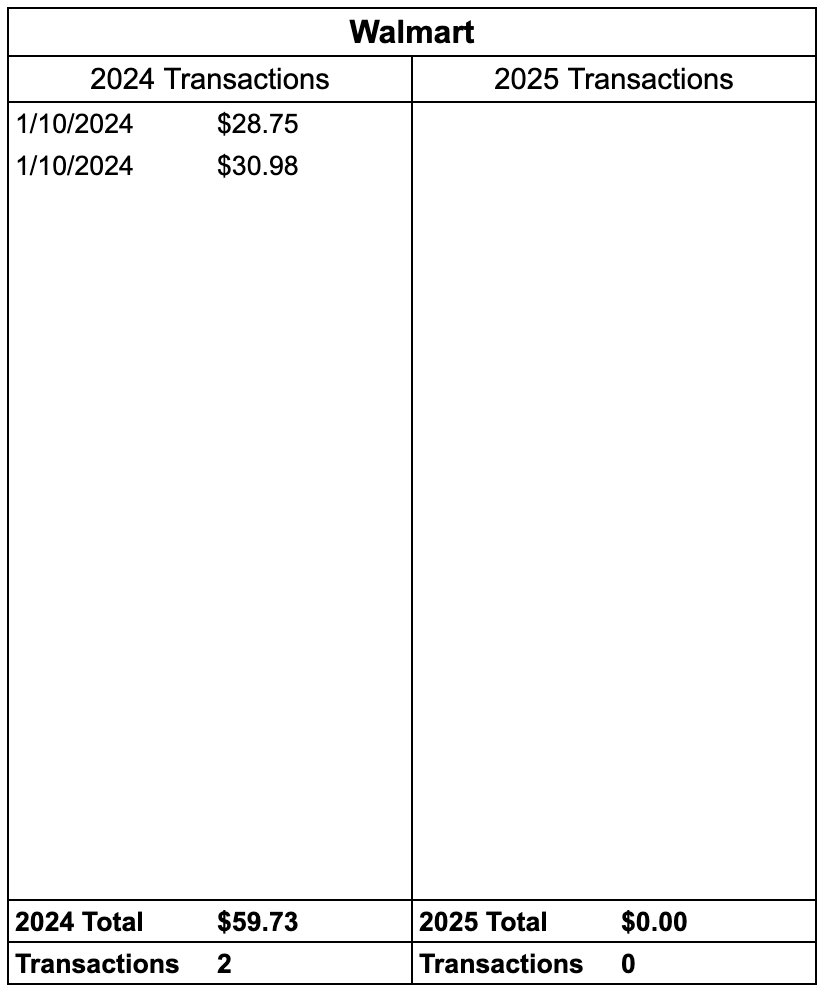
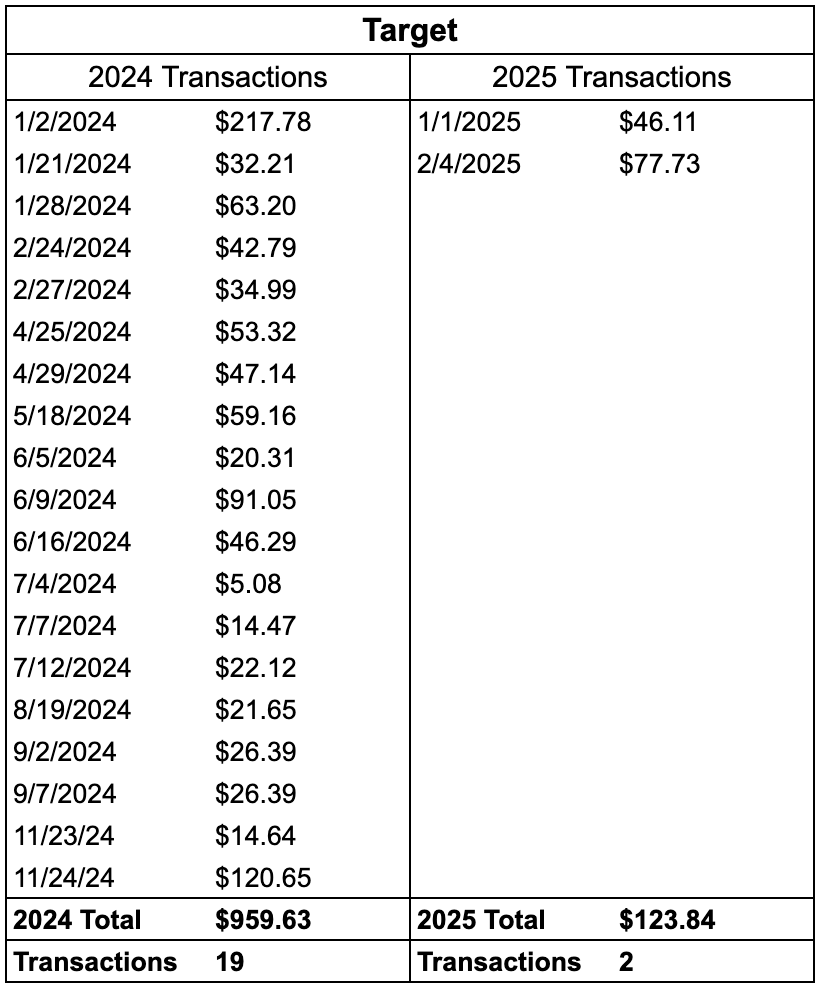
By the end of the year, I'd spent 76.2% less at the four retailers I was boycotting. I completely eliminated Walmart (100% reduction), cut Amazon by 75%, Target by 87%, and Whole Foods by 37%.
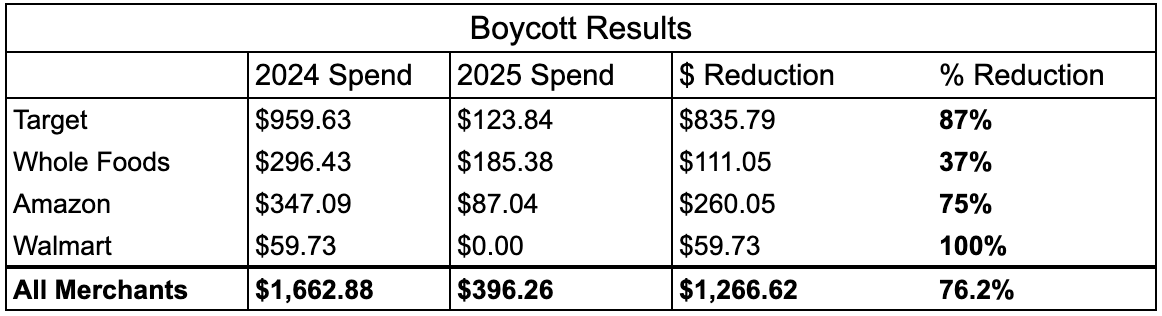
But here's the more interesting shift: in 2024, only 10% of my shopping spend went to local businesses. In 2025, that jumped to 45%. My overall monthly spending actually dropped 3%.
What Changed
A surprising part is that my relationship with consumption changed. I went into this thinking it would be a 1:1 replacement, where I'd swap items acquired from big box with some local one. What I found is that I more often questioned if I even need the thing to begin with.
My theory is that these rules increase the cost of the transaction; radically more time to shop, potentially higher price than online, effort to call around or find a store online. So that random doo-dad at Target isn't just $7.99 anymore. Now, it's two hours of travel time, a bike ride, $10, and a phone call. This increased cost just became a pattern after a while, and pretty much eliminated impulse buys.
Interestingly, even free things at events or giveaways also made me pause. My things are with me forever. Or at least until you lose it or it breaks, at which point you become acutely aware of it. I left a towel at the gym recently and thought, "okay that's not ideal," because I got the set at Target and now it's genuinely inconvenient to replace just one towel.
I'm just way more aware of the things I own now.
When It Didn't Work
Some things were impossible to avoid. I needed a specific NFC tag for work and spent hours trying to source it locally before giving up and ordering it online. Small electronic components apparently don't stock well in brick-and-mortar stores.
Also, Whole Foods is so close to my home. I find it really challenging to fully eliminate, especially when I just need one or two things. A trek to Harris Teeter (a Kroger subsidiary) doesn't seem like it's worth it. I'm still down 37%, but I miss Whole Foods the most.
Other times I set myself up for failure because this style of shopping takes time. I needed a bike lock, so I rode my bike to the used outdoor gear store -- only after biking to two other stores that were closed. Or I needed a last-minute present and didn't have days to spare for the local shop route. Amazon just makes it too easy.
Going Forward
I'm continuing the boycott, but honestly, it doesn't feel like a boycott anymore. It's just how I shop now. I can't really see myself going back because I've become fundamentally more aware, and you can't really un-know that.
It's not much of a challenge anymore either. I don't say that in a cocky way either -- it was a lifestyle change that started out of protest and turned into something I genuinely prefer. The convenience of Amazon or Target doesn't outweigh the discomfort I now feel using them.
Plus, my local stores have everything I need. Or I realize I just don't need the thing.
Appendix
For the curious, check out the change from year-to-year across all four retailers. Each row is a single transaction, and I only started tracking in 2024. Also, I am giving myself grace at the start of the year. I didn't set this goal until early February of 2025.